Showing posts with label field research. Show all posts

Thursday, February 21, 2019

AirBnB: The Rise of the Micro Bed and Breakfast for Everyday Travel


You may have heard the college kids next door talking about the swank AirBnB they landed for spring break. Perhaps the new marketing exec at the office mentioned the vacation home his wife and he rented at AirBnB. Someone at the country club might have mentioned leasing their vacation home on the site. If you’re wondering what makes AirBnB so popular, or even what the heck it really is, read on.

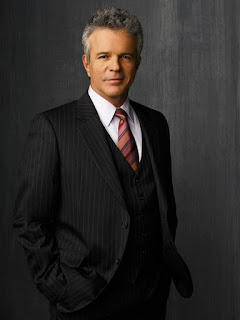
While I was tucked away on the side of a mountain by a lake in a forest for five years doing embedded research, the world changed. A lot. When I left, my favorite actors – Ray Liotta and Tony Denison – were mostly known for movies. Starbucks still made you earn Green level. If you wanted somewhere nice to stay when you traveled, you had to shell out the money for a three-, four- or five-star hotel or you had to have a friend who was willing to put you up in their swank digs.

Ray LiottaTony Denison
Fast forward to, er, now. Liotta and Denison became known for TV roles – on “Shades of Blue” and “Major Crimes” respectively. I walked into Starbucks at Green Level, but I am already more than half way to Gold because I suck down coffee like a vacuum cleaner sucks down dirt. AirBnB has made finding a cute room with a view a mouse click away rather than an art.

What the heck is an AirBnB?

The “air” in AirBnB refers to the cloud – as in virtual space. The “BnB” refers to bed and breakfast – small hotels or hostels located inside someone’s home. They dot the northeast of the US. Most bed and breakfasts are the sole business of the owner and rather massive operations with eight to ten rooms to rent. As the name suggests, they include breakfast with your stay.

The newer trend is to open a micro bed and breakfast. This type of BnB offers only one to three rooms for rent at one time. The owners may or may not live there. Some do not include breakfast but allow guests use of the kitchen to prepare their own.

AirBnB provides a central database of micro bed and breakfasts worldwide. A homeowner can register with the site and offer their rental – one room or an entire home or anywhere in between. The homeowner sets the rental price. That ranges between $10 and $1,000 per night. They also choose the level of amenities although AirBnB sets minimum standards that must be met.

What’s available?

My sole experience with a bed and breakfast before this year was having watched the old Bob Newhart TV show. That inn located in Vermont was the sum total knowledge of my BnB experience. It is actually nothing like that, rather like staying in a boutique hotel is pretty much nothing like staying at Fawlty Towers. It is not comparable to anything on TV because micro BnBs are so new. One AirBnB rental is not comparable to another – even within the same price range – because every micro BnB differs in construction, décor, owners, amenities and location.

What’s available includes everything from an RV lot you can rent on which to park or pitch a tent to whole homes in the nicest neighborhoods of a city. Any city. Pretty much any country. Anywhere.
Since my three or four day trip to Oklahoma City turned into an utter fiasco of three or four months – drug out by disastrous weather, bouts of both flu viruses – one survived by me, the others by friends whose health was required for access to my stored stuff, copious amounts of work (yippee!!!) and other very random delays, I decided to make the best of it. Sure, I held up in my favorite boutique hotel for the equivalent of a couple of months. I also devoted time to learning about and trying out AirBnB. I have stayed in three different properties now to test the waters of the service. Rather than go hog wild, as my dad would have put it, I did what I think most people would. I set a budget and stuck to central locations that provided access to the majority of the city. I used my favorite little hotel as a budget cap. It’s a three-star hotel in the central city about ten minutes from the airport. It used to be a Hilton. Then it was a Radisson. It’s cute. It’s nice. It offers everything including its own outdoor running track for a rack rate of $81 per night. Rented weekly though, you can stay there for $199 per week, plus $100 deposit. It welcomes kitty cats.

In general, my AirBnB rentals cost far less than that. They ranged the spectrum of bare bones room to opulent amenities. To give you an idea of how nice a place you can rent on a tight budget, I’ve included all three of the properties in which I stayed. I wanted to be in the city proper, preferably the northwest. I did make one exception for a home in the southeastern part of the city that had rave reviews on AirBnB. I am glad I did. It was the best of the experiences, so far. Every room I rented allows pets with no additional charge or deposit required. Yes, Silly Scamper traveled with me as my little furry research assistant, so each AirBnB rental also got her small paw of approval.

The Swank Spot in Edmond

The Edmond bed and breakfast after a little snow.
My first stop lasted a few weeks mostly due to availability because no one rents in Edmond. A micro BnB in an upscale subdivision run by a Millennial couple offered one room for rent for $30 per night. They have since begun renting all three of the home’s bedrooms. Appointed in black, white and gray with plush carpeting and an ultra-modern kitchen, this smart home provided a cozy bed and simple furnishings. I’ve bedded down in two of its available rooms. Both offered walk-in closets with two tiers of hanging rods, plus floor-to-ceiling cube shelving. Both rooms offered a double bed dressed in well-appointed linens. Silly liked both since they were the right height for leaping onto easily and she curled up and slept with me on the bed each night. The first room listed on AirBnB features a television with a gaming system which I never used. The second room I rented there features a six drawer dresser. Room rental includes the shared full bathroom next door to the two bedrooms.

The couple who owns the place have a dog and a cat, both of whom lived there with them at the time.
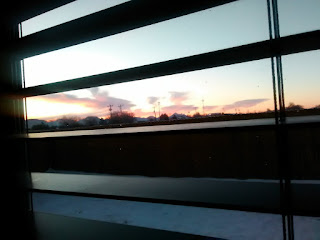
Sunrise through the kitchen window at the Edmond bed and breakfast.
They were only allowed in the common areas of the home, but the cat continually tried to finagle his way in to my room to flirt with Silly and get high on her catnip. That provided some hilarity and hijinks. There was no breakfast or other meals, or snacks provided. I purchased my own groceries and cooked in the kitchen. Laundry privileges were included in rental, so I caught up my travel wash. Exploring the neighborhood proved both fun and safe since it’s in one of the best areas of town. I discovered a tasty Thai restaurant two blocks from the home. A few doors down from it, I picked up basic groceries. A couple of full scale grocery stores were located a less than one mile walk from the home. That’s handy if you do not want to have to Uber everywhere and you are not on a road trip.

The Bare Bones Room in The Village

Okay, people, not the M. Night Shyamalan “The Village.” The Village is the slightly less uppity neighborhood next to Nichols Hills which is, essentially the Beverly Hills of OKC. So, think of The Village as Hollywood Hills, but in Oklahoma City which – like Los Angeles – is hugely and massively spread out and pieced together from a ton of smaller localities that were annexed. In fact, Oklahoma City’s bigger. It offers up 606.4 square miles from which to choose to Los Angeles’ 468.7 square miles.

The tidy and cozy twin bed at The Village bed and breakfast.
The two story home in The Village boasted a balcony with my room. Bonus. It is winter, but it is Oklahoma, so there were actually a couple of days perfect for sitting on the balcony – one in the 50s, one in the 60s. The single bed had cozy blankets and a comforter. Silly mewed a bit each night because the platform bed was too high for jumping onto easily. She doesn’t like being placed on the bed because she’s a cat, therefore independent, and likes to come and go as she pleases. She slept under the bed.

The vast bedroom space at The Village bed and breakfast.The vast room rents for $20 per night. Other than the bed, it held only an oak Windsor back chair. The room featured a full size closet of its own which the homeowner had stocked with body wash, shampoo and conditioner for guests. It features three rented bedrooms in the home, two of which were held at the time by long-term renters. Both regular renters have dogs and the person the homeowner contracts cleaning to struggled to keep up with cleaning up after them. The AirBnB room remained clean though because the dogs were not allowed in it. All renters share the full bathroom on the second floor and the half bath on the first floor.

Again, laundry facilities were included. I did a load of laundry while there. Everyone also shared access
to the kitchen which may be where I picked up the flu. In homes where the homeowner does not live on the property, I learned it is more important for them to include cleaning supplies like sanitizing wipes and bleach wipes. All rooms shared the fridge space, too. I didn’t cook despite the kitchen since the presence of all the other renters did nothing to encourage my culinary creativity. There was an easy to walk to neighborhood of shops, stores and restaurants. The Aldi would have been a mile hike, but a 7/11 provided basic groceries with only a four block jaunt.

The Hidden Treasure in the Southeast Part of Town

I’m lucky to know Oklahoma City relatively well. I lived here for my senior year of high school. I also did both of my “tours of duty” as an AmeriCorps volunteer in Oklahoma City. That’s the domestic version of the Peace Corps, ya’ll. One of my two assignments was at Southeast Area Health Center (SEAHC) and my time there has lent me a decent knowledge of a much maligned area of the city. My most recent bed and breakfast is located about 14 blocks from my former AmeriCorps assignment, in the heart of Oklahoma City’s Hispanic district. When I worked at SEAHC, I got used to INS helicopters buzzing me as I walked from the bus stop to the health center. They did weekly buzzes to try to spot illegals. I also got to know a series of neighborhoods of extremely hard working, lower middle income individuals and families. While my college buddies were aghast that I schlepped between the bus stop and office each morning, I rolled my eyes. They were working on gossip and innuendo instead of actual, firsthand knowledge of the neighborhoods.

The cuddly queen bed in the southeast part of Oklahoma City is piled high with quitts.
The C3 Annex and the C3 Guesthouse are both located in the heart of Hispanic Oklahoma City. They overlook one of city’s largest parks with a playground, soccer fields and an activity center. You’ll find three churches, including the massive Iglesia de Dios, within a two block walking distance. You can also walk in either of two directions and reach groceries in a couple to six blocks. The C3 stands for Craven Three – the last name of the family who own both homes. The three stands for mama, Steffie, and her two children – one daughter and one son. The C3 Annex began as her Habitat for Humanity home. In it she reared her two children alone. Her now adult children help her run the Annex and Guesthouse. Her son is the handyman and repairman. Her daughter helps clean, organize and purchase for the homes. Ms. Craven turned her home into a business, plus she rents space in her current home, as well. She decorated both over time and her love of decorating shows. You’ll feel like you are visiting New Orleans. She features a skull motif and French street name prints throughout the home. She purchased, then refinished, each furniture piece. One entire wall of the hallway stands testament to the many visitors who have benefited from her goal to provide travelers with a safe, affordable place to stay. That wall features a bulletin board full of messages from all who have stayed there – tips, hellos, encouragement.

The C3 Annex features three bedrooms for rent each going for $30 per night. They’re all well-
Silly loved furniture of low enough height she could jump onto because cats are independent.
appointed, fully furnished, cozy and comfortable. Though I jaunted down to one of the grocery’s for goodies, you do not need to do that. Ms. Steffie provides bagels, oatmeal, popcorn, snack crackers, milk, juice, tea, coffee and hot cocoa for all who visit. All bedrooms come with access to the kitchen and laundry. Everyone gets use of the shared living room and dining room.

Silly loved the ottoman that matched the chair in our bedroom. Although the bed was as high as the one in The Village, it meant she could jump up onto the ottoman, then jump up onto the bed. I had a happy cat because she could cuddle her Meowmie as she slept. We both dug the huge closet we had to ourselves. All bedrooms shared the full bathroom. It is also stocked up with goodies you’d need while traveling – body wash, shampoo, conditioner. The complimentary Netflix subscription attached to the big screen TV in the living room rocked.

The Sum Up

Oklahoma City provides a huge array of choices on AirBnB. Some things are a given. The website requires its homeowners to provide each guest their own towel and soap. The bed has to be made with clean sheets. You’ll get a place that meets AirBnB minimum standards, no matter what. Beyond that, you can find a spot that suits basic needs to your most opulent, wildest dreams. Only your budget limits you. While researching for this blog, I have stuck to homes with extremely reasonable prices. I think that most people who travel frequently or need to travel on short notice probably need or want the reasonable price. I also only chose homes that allowed pets and offered free WiFi. WiFi is a necessity for getting work done and catching up on Liotta and Denison television appearances. I am currently working my way through both “Shades of Blue” and “Major Crimes,” after having left the world as we know it an addict to “The Closer.”

I also figured out through my extended trip to Oklahoma City that not everyone knows about AirBnB or my other new fav app – Uber. (That’s another blog.) AirBnB continues to grow though and as it does, it grows its usefulness. It recently added a “For Business” division making it easier to book for others, for groups and to process travel claims for stays on the site. Even some of my Uber drivers didn’t know how common AirBnBs had become.

I snuggled up in a blanket in the living room more than once at the C3 Annex. So super cozy!
So, as spring conference meeting times dawn and summer’s conventions pack your itinerary, save yourself some money. Oklahoma City provides only one example of the prevalence of micro bed and breakfasts throughout the US. You can easily find a place to stay for less than $50 per night, in many cases, for less than $30 per night. Students rejoice. You do not have to pack yourself into a hotel room like sardines in a can to afford to attend AAG, AMS, ASAA or any other alphabet soup of academia. (My friends and I had to do that. It sucks.) You can even get a meal thrown in for good measure.

AirBnB even provides you with a travel credit when you sign up through an existing member. (The link is me giving you that credit.) You get a $40 credit on your first stay of $75 or more. That means you could get a couple of free nights if you pick a cheaper place or, at the very least, one free night. You also get a $15 credit toward your first “experience,” which refers to the bike and walking tours or cooking classes, etc. the site also offers.

While AirBnB started as a spot for managing unique rentals and vacation homes, it has morphed into a business traveler’s mecca of affordable and cushy digs. Do check out the Italian villas and East coast beach houses, too, though. You could also land the perfect vacation spot. Or, use the same link to get started offering a room in your home or your whole house for rent as a micro bed and breakfast. Put it to work for yourself and others.

Carlie Lawson writes about tech, mobile and online video, entertainment, sports and fashion. She wrote for JollyJo.tv, Keysian and Movitly for a combined seven years. A former newspaper journalist, she now mostly ghost writes for her clients via her company, Powell Lawson Creatives. Invalid Inputs is her first independent, formal blog. She earned BAs in Journalism and Film & Video Studies from the University of Oklahoma. She also earned her Master of Regional & City Planning at OU. She has worked as a model since she was 17.

Thursday, January 25, 2018

Blockchain and Cryptocurrency: Providing Decentralized Opportunities to the Impoverished

Earlier today, I was asked as a part of a proposal how I developed my interest in blockchain, cryptocurrency and related technologies. My dashed off answer quickly made me realize, its the ideal topic for this week's blog. NERD ALERT: I spend my days trail running, hiking, reading research, reading other futurists like Jason Hope and writing on the Internet of Things and blockchain technology. Of course, there's a story to how a girl goes back and forth from outdoorsy pursuits to business and finance everyday. It has to do with the person who introduced me to the great outdoors, business and philanthropy - my Daddy.

Research and Writing

The coins interest came out of my writing niche. I previously wrote for the business and finance blog Keysian. One of the topics I covered was FOREX. I have always had an interest in computing. In my own consultancy, I researched the impact of the Internet on drought and flood mitigation. The potential of blockchain technology as a business continuity option interests me, for example, IOTA's blocktangle and its offline sub-tangles. This means using its technology and its cryptocurrency, MIOTA, could enable businesses in areas with frequent brownouts or blackouts, like California, to continuously conduct business without electricity. Whether faced with drought, floods, mudslides, or earthquakes, it could conduct business as usual. The technologies involved also offer those in remote locations like Pitcairn Island, which only has Internet via satellite a few hours per day, to found and conduct businesses on a global schedule. Further, I grew up with an interest in business and finance, as well as, philanthropy that empowers.

My Daddy: "Preacher Charlie"

My Daddy and I posing for a formal portrait when I was in high school.

But that is my adulthood. The true impetus for my interest stems from watching my dad find inventive ways to help the community, especially its impoverished. As a pre-teen, I watched my dad and one of his best friends, "Rev. Lawrence," found and run each summer, a vacation Bible school for migrant workers' children. They purchased Bibles and teaching materials in Spanish and English, thus combining ministry with language skills for the children. The kids kept all the materials and took them home, passing on their developing English skills to their parents. Speaking and reading English empowered two generations to move up and earn a better life.

Cryptocurrency: Empowering the Unbanked

Cryptocurrencies have a similar potential to empower by removing the third-party, banks. Currently, 2 billion world residents are un-banked. They either lack access or do not qualify for an account. Cryptocurrency empowers the unbanked with accounts, currency, a business platform and access to venture capital funding for smart contract projects. (IOTA builds this in and Cardano includes it in its plans.)

Blockchain: Bringing Business to the World

I believe blockchain technology and cryptocurrency done right have the potential to empower the disenfranchised, protect business continuity and provide much-needed privacy protections. Cardano's two layer system shows that there's room for meeting regulatory requirements while providing the positive potential of the blockchain to the world. While the majority of the assignments I write for clients center on initial coin offerings and portfolio investment potential, my own interest in blockchain technologies centers on its empowerment potential.

A decentralized system of business with the ability to privately barter, trade, buy and sell peer-to-peer, person-to-person, provides a way for those living in decentralized locales to found global businesses and earn a living. In many Third World countries, cell phones, especially smart phones, remain rare. In the US, those at the lowest income levels may only have a free cell phone with limited free service from a government program. These usually provide 500 MB of data per month. In areas such as my Oklahoma research area, some homes have no electricity. Emerging technology allows people in such situations as these to set up an automated business on the blockchain, or better, the blocktangle. Remember, those offline sub-tangles enable offline transactions.

Decentralized Opportunities

Once built, smart contracts run exactly as programmed, requiring no human intervention. That lets someone of limited means begin. As they make sales and earn cryptocurrency they can reconnect weekly to exchange one currency for another. To cash out for actual cash at first, to pay bills and purchase an unlimited data plan, a mere $30 to $40 cost in the US. As their small business grows, rather than Proof of Work, they can move to Stake, holding much of their currency as its value grows. Imagine a technology that allows the poorest peoples to create a method of making a living regardless of geography, topography or ethnicity. On the blockchain, all is code and the address delivers you to an app or exchange, not a barrio or dirt farm. No one sees skin, hears accent or knows your hometown. I love blockchain, cryptocurrency and its related technologies because it provides each person with the same fertile fields to plow, an egalitarian system of creation, idea and philosophy that gives each person an equal chance to succeed and to thrive - decentralized.

***

Carlie Lawson writes about tech, mobile and online video, entertainment, sports and fashion. She wrote for JollyJo.tv, Keysian and Movitly for a combined seven years. A former newspaper journalist, she now mostly ghost writes for her clients via her company, Powell Lawson Creatives. Invalid Inputs is her first independent, formal blog. She earned BAs in Journalism and Film & Video Studies from the University of Oklahoma. She also earned her Master of Regional & City Planning at OU. She has worked as a model since she was 17.

Sunday, January 14, 2018

What No One Tells You About Conducting Field Research

Something no one tells you about field research in grad school is how insanely tough it will be. By the time you meet professors doing field research, they have an in at NOAA or NSF, a program director who loves their work. They have staff and research assistants who take care of everything back home while they traipse around in the field. If there's a funding freeze, they have Foundation accounts and fat bank accounts to turn to for extra funds. They can pay for a local guide, someone to grease the wheels. Their home away from home most often has all the comforts of home. This paints an innacurate picture of first time field research for grad students. It did for me.


About Carlie Lawson
My name is Carlie Lawson and I undertook my current project, a self-funded study of the effects of weather events and natural hazards on an unfinished subdivision, thinking it would be an adventure. I pictured long-term field research in terms of the tales I'd heard from Drs. Mark Morrissey and Susan Postawko when I worked at Environmental Verification and Analysis Center (EVAC). Those research jaunts took place in far away islands like Vanuatu and Pitcairn Island.

I plugged along as a researcher after graduating with my Master's, hating that it - my true love - had to come second to a day job that although related, didn't focus on my own research or interests. I paid my bills, my dues, and socked away money in a retirement account, so I could save tax-free. I dreamt of my chance to conduct my research.

Academic Heaven
Things went well-ish in an academic environment. After graduation and a short stint at the Center for Public Management, I found myself with the glorious challenge of managing operations at both EVAC and Center for Spatial Analysis (CSA), where Dr. May Yuan was not only killing it as a GIS researcher, but as a role model for young women interested in science and other STEM fields.

I hit heaven in 2006 with fellowships to the Weather and Society*Integrated Studies workshops in Norman, OK and Boulder, CO. I met another STEM role model there, WAS*IS founder, Dr. Eve Gruntfest. An invitation to Dr. Eva Regnier's Forecast Integration Workshop at the Naval Postgraduate School followed. Thank God for Eva because I was otherwise the only girl in a room full of military males and a couple of male civilians from large universities who were professors running research centers.

As I organized sessions at anthropology and geography conferences, and co-authored presentations with friends and colleagues, the yearn to do my own research grew. I found in Dr. Ilan Kelman, a fellow WAS*ISer, a willing, albiet long-distance research partner. We agreed to collaborate on two projects - one of his and one of mine. Voila! My research.

Sweet Little Pitcher
I chose a friendly town that's now a part of history - Pitcher, OK. In Pitcher, I found the convergence of my childhood interest in ghost towns and my adult interest in protecting the environment, fostered by professor Bobby Kennedy, Jr. when he spoke at my university and I interviewed him for a couple of publications. I was just finishing undergrad and trying to find my niche as a journalist. It turned out, it was as an environmental and weather researcher who writes using mostly active verbs.

Pitcher had to consist of only day trips. The soil and water had been so tainted the government bought out the businesses and homeowners. (The air isn't that great either.) I consider myself lucky to have visited it while it existed. Its resilient people fought valiantly for years to save their town, working with the Environmental Protection Agency (EPA) to try every known remediation to save the tiny mining town. At one point, the EPA replaced the town's topsoil. As remediation techniques failed though and years passed and residents' health failed, the state and feds partnered in the buyout.

For 20 years, Pitcher had ranked as the US's number one Superfund site. Finally, it dropped off the list entirely. Pitcher no longer exists.

Following the buyout, the government surrounded the entire town with a high chain link fence like those that surround prisons. This one doesn't keep anyone in though, but out. Between its multiple subsidence events and the tainted environment, entering the town became too dangerous. Many locals had never fully understood the dangers. Their children road their bikes on mountains of raw mining chat - mine tailings piled above ground in town because the mines in Pitcher operated before EPA regulations existed, in a time when businesses and corporations did whatever they wanted and whatever made them the most money.

You can only see the memory of Pitcher from a distance now. The government also closed the two interstate exits serving the ghost town. You can see the mountains of chat from the interstate though. They're that high. You might look at a map to try to figure out what mountain chain it represents. None. You pass by a reminder of what our country was like before regulation - just like those Third World countries President Trump maligns. Even those mountains may eventually disappear as the government attempts to repurpose the chat into road covering.

The Future Research
Every presentation I made on Pitcher whetted my appetite for two things - a long-term study and my Ph. D. While I sussed out grad schools and saved up for the impending massive grad school bill, I decided to undertake the study, through my consulting firm. I could run it and my PR creatives firm from virtually anywhere with an Internet connection and electricity. This time, I wanted to study a place affected by weather. I also wanted a more upbeat outcome - a place that could turn things around.


The Stalker: I Won't Keep Quiet Anymore
Now, researchers, especially university professors, advocate keeping your personal life out of everything. This works to a point. Ultimately, I identifed two ideal candidates for research areas - tackling subdivisions instead of towns this time. My choices consisted of one in Norman, OK and one in Longtown, OK. I chose based on personal reasons. Two things made Longtown the better choice. One, its location about 70 miles southeast of Tulsa, OK, put it an hour and a half closer to my then best friend than Norman. The second item began in 2006-2007 and I have never spoken about it before in relationship to research or my profession.

Inspired by those amazing Postawko-Morrissey adventures and their awesome marriage, I began dating a colleague, a fellow WAS*ISer who will not
get mentioned by name. He deserves to be erased from my life. He began stalking me while we dated. Ladies, SEVEN phone calls per day is NOT
normal for any guy. When I went out for runs, he would troll the streets where he knew I did laps. At first, I thought he happened to
run into me because he was running errands or coming home from dinner out. Over time, it became clear he was not sane.

Ironically, it was his own lies that ended us up in court the first time. Learning that I planned to go to the cops and angry that I would no longer sleep with him, he filed a false police report, accusing me of stalking him, even lying in the report to say that we did not know each other. At the time, we had been friends for ten years.

Getting Personal: Court Appearance One
That was the turning point of me going from sweet, Southern girl to the baddest assed bitch who ever lived. Although I literally cried through the entirety of the first court appearance, I managed to present my evidence refuting his lies. (I represented myself.) That included one and a half YEARS of phone records showing his seven calls per day and my ONE returning his call. I also provided school attendance data, employment histories and I went armed with photos of various friends' gatherings with both of us, plus his emails to me. The judge looked at the phone records and knew he was lying. He confessed under oath to false statements in the police report, to our sexual relationship, to having known me since college.

In the interim, a kind detective at Norman PD taught me how to document the crime of stalking. Police encourage those stalked to keep a journal and to make a police report as soon as an event occurs. In our first court appearance, I defended my good name and reputation.

Getting Personal: Court Appearance Two
In our second court appearance, I came armed not only with the same evidence of the first, but a handwritten diary detailing six months of stalking and more than 30 police reports between two police departments. It had reached the point where I could not garden because my stalker would drive by my home, park in the lot of the deli across the street and sip a cola while watching me from his van.

Bad ass bitches take no shit. I am that bitch. The judge, a long-time member of the bench, seemed horrified. At one point, she and my stalker yelled at each other. I merely handed her evidence. I never shed a tear. Bad bitches don't cry.

I had also begun doing laps with friends. Some couldn't run, so we walked. It's still exercise. My stalker is so insane that he continued to troll me each night in his big, black van. He had the bad luck to do so when I was with "Uncle Randy" one night. A retired Marine who rode with the Patriot Guard Riders, Uncle Randy adopted the neighborhood's residents, getting folks involved with the PGR and other community organizations. In his 60s at the time, he cared for his dad, a Navy vet in his 80s. Seeing my stalker do exactly what I said he did pissed him off. Never piss off a Marine. Instead of walking me home, he walked me to his dad's and the three of us watched my stalker circle the block repeatedly, waiting for me to leave. He finally gave up that night and my adopted uncle walked me home. At the second court appearance, he served as the only witness the judge ended up hearing. That one was enough.

After his testimony, she questioned my stalker directly. His response to her query of why did he do that pissed her off.

"I wanted to know where she lives. I wanted to know where she moved to."

I was, you see, in my third home since I had begun dating him.

She screamed at him that he had to stop.

I still did not go home with a VPO though. Knowing the truth of our history and the numerous in common colleagues, she said she did not want to impede research. At the time, we both conducted weather safety and preparedness research. The only protection I had became distance.


Piney Creek It Is
For those two personal reasons, I chose Piney Creek subdivison of Longtown, OK (an area in Stigler, OK zip code).. It's about 180 miles from Norman, OK, tucked away on the shore of Lake Eufaula, a massive Army Corps project that formed the fifteenth largest man-made lake in the US.

I envisioned reading research and writing over cups of steaming coffee in my kitchen overlooking one of the ponds that feeds into the lake. I pictured long hikes to photograph storm damage to homes and roads throughout Piney's 27 miles of road. I thought I'd keep modeling while out here.

Reality varies vastly. I write this in an unfinished cabin with curtains for dividing walls and no plumbing. I have a composting toilet. The friends helping build it deserted out of boredom and the long haul to reach it. I tried for two years to hire workmen to finish it. No one takes jobs in Piney Creek. They're used to not getting paid or having equipment stolen while they work. I finished the interior walls myself. I'm pretty proud of the paint job, especially the little frame motif around each window. I can only hike at night now because of crazy mountain men stalking me. Modeling while l here only worked for the first year and a half of my five year study. Then someone rear ended my car at high speed (my Silkwood-esque experience). It accordioned. Another party stole the motorcycle I replaced it with, so until I save for another car, I have to have groceries and supplies delivered.

The nearest groceries lie on the far edge of Longtown, nearly to Eufaula. It's a seven mile hike and one I used to joyously make until the locals decided I should not be allowed to remain single. (Honestly, as unprofessional as it sounds, they are a little, no, really, psycho.) Suddenly, I was stalked by numerous old men who tailed me when I went to town and when I came back. For awhile, I wasted my energy shooting them the bird, cursing them out when they propositioned me, and then, I found grocery delivery. I miss the hike and the Hunt Brother's pizza, but not the old hillbilly assholes.

The Truth About Field Research
And there's the thing. No One at your university will tell you what it is really like to do field research. No One tells you the horror stories. No One tells you the disrespect you'll get from males or females in the research area - especially if you choose somewhere in the Bible Belt or an uneducated or below poverty level community. Those communities don't understand your ambition, your drive, your desire to better yourself and the world. They don't know what STEM means. To them, women don't work. They're misogynistic throwbacks to an archaic era when women kept house and made babies. Let's hope they all die soon and their kids modernize.

No One at your university tells you what it will really be like to do on-site, embedded field research because, honestly, you probably wouldn't go. And there's the hitch. The world NEEDS anthropologists, environmentalists and geographers to keep going to the forgotten places, the places no one knows about to help tell the story of the potentially ungrateful people who don't understand why you are there or what you actually do. If those researchers and the journalists who cover these topics didn't exist, companies like the ones who set up shop in Pitcher would still create mines that caved in taking an entire downtown with it. They'd still poison air, soil and water at their whim. The EPA would not exist because no one would have pressured Congress and public policy would continue to kiss the ass of corporations instead of protecting the public.

So, I'll tell you about the death threats, the tweakers running through my woods at night, what it's like to watch a meth lab burn or to meet a girl who was raped by a 35 year old when she was 13 years old and forced to marry him. And I conduct domestic research.

That is the reality of what you will experience in field work. I will tell you about it, not to scare you, but to prepare you. We NEED researchers still going into the most marginalized areas. We NEED those unknown stories told. We NEED the truth to come out about oppresion, subjugation, human trafficking and environmental disasters. We NEED female scientists conducting it. We NEED to move women forward in STEM fields, and those of us who have attained education and experience NEED to reach out and help those women who have not. If you get death threats, there's always Kevlar and booby traps.

Carlie Lawson writes about tech, mobile and online video, entertainment, sports and fashion. She wrote for JollyJo.tv, Keysian and Movitly for a combined seven years. A former newspaper journalist, she now mostly ghost writes for her clients via her company, Powell Lawson Creatives. Invalid Inputs is her first independent, formal blog. She earned BAs in Journalism and Film & Video Studies from the University of Oklahoma. She also earned her Master of Regional & City Planning at OU. She has worked as a model since she was 17.

Snazzy Shopping Finds

I shop rarely. I work often. When I shop, I want to share cool finds. In the past week and a half, I found some of the cutest things and I...